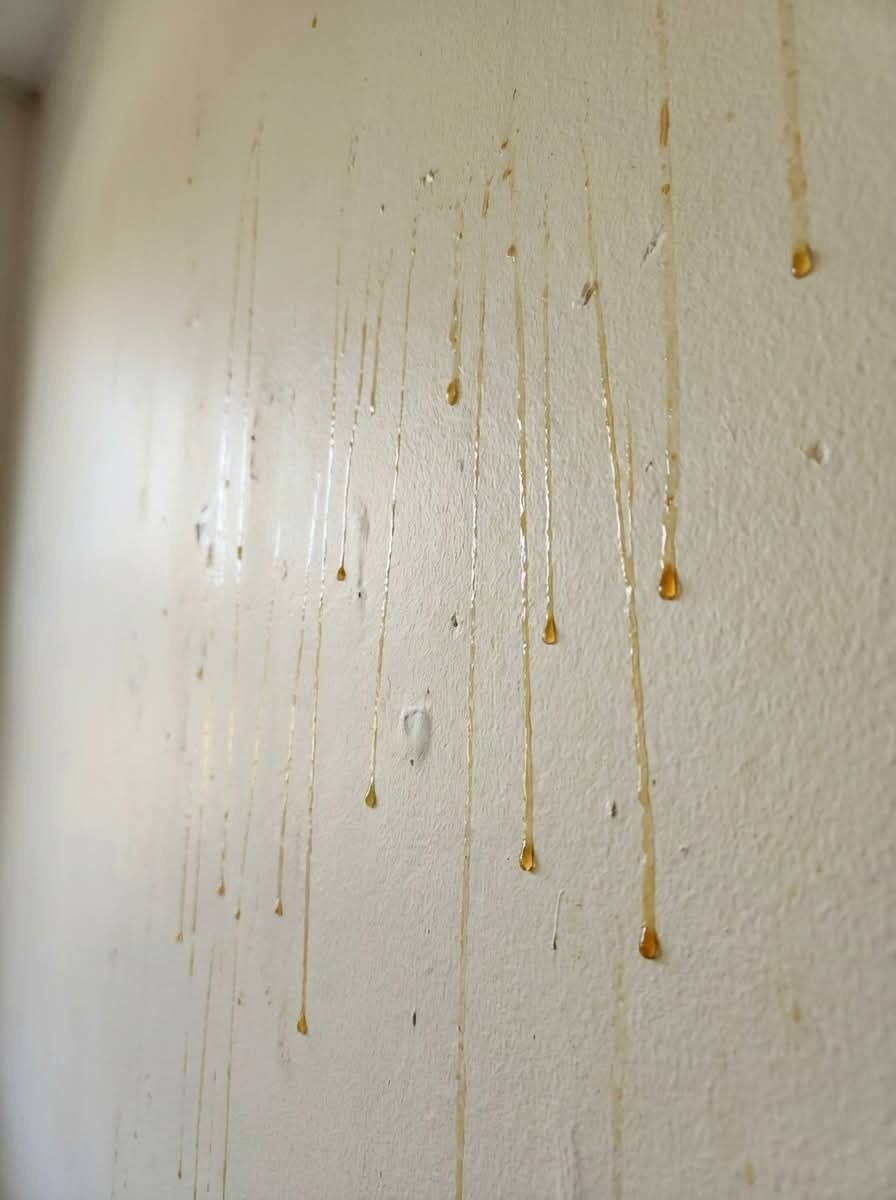
You walk into your property after a tenant moves out… and suddenly you notice strange yellow streaks slowly dripping down the walls. They look sticky, stubborn, and no matter how much you wipe, they keep coming back.
If your tenant didn’t smoke, this can feel confusing—and even a little alarming.
Let’s break down what’s really happening… and exactly how to fix it.
🟡 What Are Those Yellow Drips?
That yellowish, sticky substance is usually caused by one of these:
1. Surfactant Leaching (Most Common)
This happens when water or humidity pulls chemicals (surfactants) out of the paint. It leaves behind yellow or brown drips.
Why it happens:
- High humidity or condensation
- Fresh or low-quality paint
- Poor ventilation
2. Cooking Grease & Steam Build-Up
Even if the tenant didn’t smoke, cooking—especially frying—can release oils into the air. Over time, these settle on walls and turn into sticky streaks.
3. Nicotine Residue (Less Likely Here)
Even if they said they didn’t smoke, sometimes smoke residue lingers from previous tenants—but you mentioned they didn’t, so this is less likely.
4. Moisture or Leak Issues
Water coming through walls can pull stains and impurities to the surface, creating drip marks.
🧼 Step-by-Step: How to Clean It Properly
Follow these steps carefully for the best results:
✅ Step 1: Test a Small Area First
Before cleaning the entire wall, try a hidden spot to make sure the paint doesn’t get damaged.
✅ Step 2: Prepare a Cleaning Solution
Mix:
- Warm water
- A few drops of dish soap
- OR use white vinegar (1:1 with water)
✅ Step 3: Gently Wipe the Wall
- Use a soft sponge or microfiber cloth
- Wipe from bottom to top (this prevents more streaks)
- Don’t scrub too hard—you might damage the paint
✅ Step 4: Rinse and Dry
- Wipe again with clean water
- Dry with a soft cloth
⚠️ Important:
If the yellow stains come back after cleaning, it’s not just surface dirt—it’s coming from inside the paint.
🎨 Step-by-Step: How to Fix It Permanently
If cleaning doesn’t work, here’s the real solution:
🔧 Step 1: Clean the Wall First
Remove as much residue as possible (as explained above).
🔧 Step 2: Apply a Stain-Blocking Primer
Use a high-quality stain-blocking primer (very important).
This prevents the yellow stains from bleeding through again.
🔧 Step 3: Repaint the Wall
- Use good-quality paint
- Apply at least 2 coats
💡 How to Prevent It in the Future
- Improve ventilation (open windows, use exhaust fans)
- Avoid excess humidity
- Use high-quality paint when repainting
- Let walls fully dry after painting
🧠 Final Thoughts
What you’re seeing might look strange, but it’s actually a common issue—especially in homes with humidity, cooking activity, or certain types of paint.
The key thing to remember:
👉 If it wipes off easily, it’s surface residue.
👉 If it keeps coming back, it’s inside the paint—and needs sealing.
Once you fix it properly, your walls will look clean, fresh, and completely normal again.